67 vs 61 Kids Beats Battle
- 4.1
- Rating
- 100.00K
- Installs
- Free
- Price

 Analysis by App-foxy
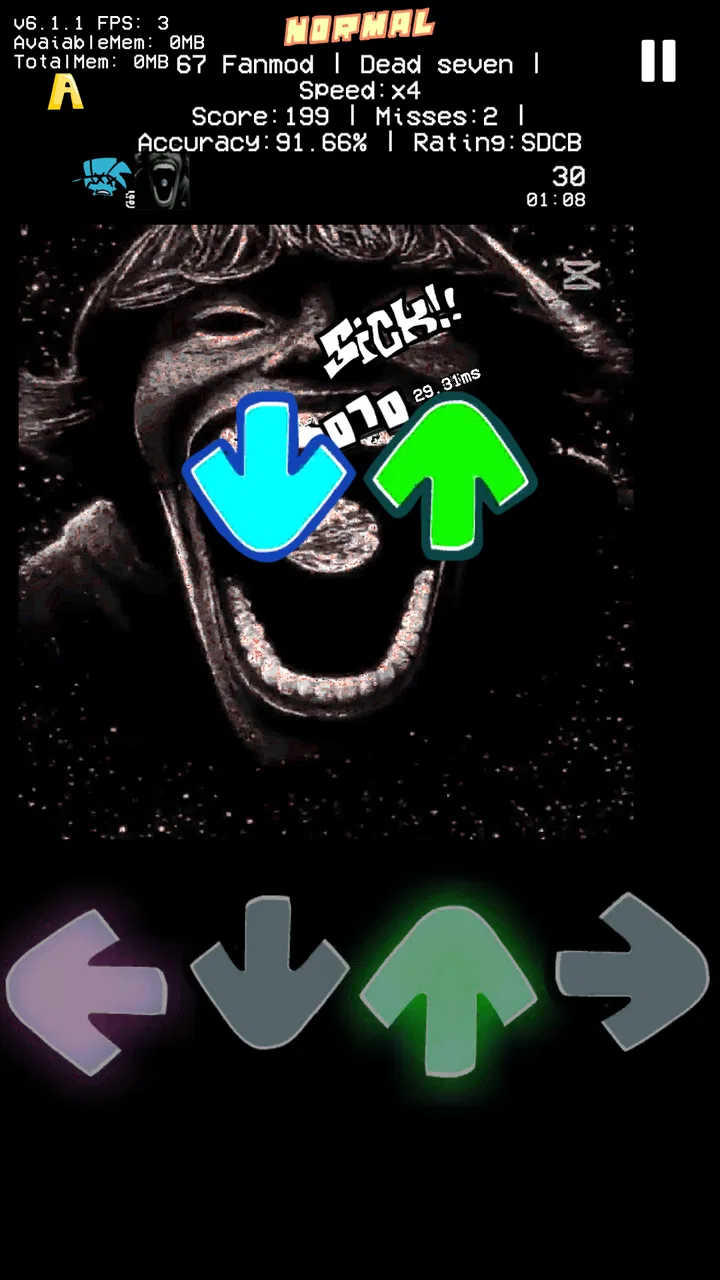
I went into 67 vs 61 Kids Beats Battle expecting a small rhythm game built around a playful face-off, and that is exactly where its appeal lies. You choose a side of the musical clash, follow the action, and try to keep your timing together while the Boyfriend and Girlfriend theme frames the battle. It is free, quick to understand, and much more focused than a large music app packed with playlists, social features, or complicated progression systems.
The basic idea is easy to recognize from the title: a group of wild kids becomes the opponent in a rhythm duel. The store summary presents the game as a battle involving Boyfriend and Girlfriend, while the short description highlights the contrast between sixty-seven and sixty-one kids. I would not treat those numbers as a promise of a deep roster or a character-collection system. The important point is the unusual visual setup: this is a music game that turns a crowded kid-themed confrontation into a timing challenge.
That focus makes it a reasonable choice for someone who wants a lightweight rhythm experience rather than a full arcade package. At the same time, it also creates the main question I kept asking while playing: does the battle itself provide enough variety to make me start another session, or is the novelty strongest the first time? My answer is mixed but positive. The game is most enjoyable in short bursts, especially when I want something immediate and noisy without learning a long rulebook.
You May Also Like

 AccuWeather: Weather Radar
AccuWeather Review: A Quick, Clear Forecast for Everyday Decisions
For everyday plans, the best forecast is the one you can understand quickly. AccuWeather makes rain timing, radar, and local conditions easy to act on, with a few trade-offs.

 Hill Climb Racing
Why Hill Climb Racing Still Turns Crashes Into One More Run
A tiny car, a bumpy hill and one more upgrade: Hill Climb Racing keeps resurfacing because its simple chaos makes every near-miss feel personal.

 AliExpress - Shopping App
AliExpress Makes Global Shopping Feel Personal, but Shoppers Bear the Risk
AliExpress turns a global marketplace into a pocket-sized discovery engine. Its reach is useful, its shopping loop compelling, and its trade-offs easy to miss.

 Lords Mobile: Kingdom Wars
Lords Mobile Is a Kingdom-Building Routine, Not a Quick Match
A case-by-case verdict on the building, battles, device demands, and social commitments that make Lords Mobile rewarding for some players and exhausting for others.

 PDF Scanner app - TapScanner
TapScanner Makes Paperwork Easier to Capture, Check, and Share
TapScanner makes scanning with a phone feel less like a rescue operation and more like a dependable step in getting work done. Its capture tools are useful, though not flawless.

 Block Blast!
 Shows How Much a Puzzle Game Can Leave Out
A quiet grid game shows why puzzle players increasingly value instant clarity, repeatable skill and low-pressure play—and where the genre still needs to catch up.
More From Our News Desk
View All News


How the battle loop feels from the first tap
I find the first few moments work best when I treat them as a chance to learn the visual rhythm, not as a test of reflexes. The crowded battle theme can compete for attention, so I focus on the cues that guide my response and let the character action sit in the background. That first adjustment also gives me a useful way to judge whether the game’s quick, repeatable style is a fit.
The first action is deliberately simple
The best part of the opening is that the game communicates its purpose quickly. You are not asked to understand a complicated economy before playing. The central task is musical: watch the incoming action, respond at the right moment, and stay engaged with the exchange. That makes the first attempt approachable even if you are not usually comfortable with rhythm games.
I found it useful to treat the opening round as a calibration period rather than trying to play perfectly immediately. The screen can feel busy because the theme is built around a lively kids-versus-kids confrontation, so my first instinct was to look at everything at once. A better approach is to identify the actual timing cues and ignore decorative movement until the rhythm becomes familiar. That small change makes the game feel less chaotic.
The Boyfriend and Girlfriend framing also gives the action a recognizable identity. It is not simply a sequence of anonymous notes on a blank background. The musical exchange is presented as a contest, which gives each successful response a little more context than a generic tap target would have. I especially liked this when playing casually, because the presentation made a short round feel like an event rather than a practice screen.
Still, players coming from more technical rhythm games may find the first steps too gentle. This is not the kind of experience I would choose when I want an elaborate tutorial, detailed performance analysis, or a carefully layered difficulty ladder. Its strength is immediacy. You can start quickly, but that also means the game does not spend much time explaining deeper strategy.
Timing feedback gives every mistake a consequence
The rhythm loop works because the game makes my input feel connected to the musical exchange. When I respond well, the battle moves forward with a satisfying sense of control. When I lose the timing, the momentum becomes harder to maintain. That relationship between action and feedback is the real center of the experience, not the large number in the title or the novelty of the kid battle alone.
One practical tip is to avoid frantic tapping when a sequence becomes difficult. I initially tried to compensate for missed beats by pressing faster, but that usually made the next response worse. The better method is to pause mentally for a beat, find the next clear cue, and rejoin the pattern. In a rhythm game, recovery is often more valuable than trying to repair every mistake instantly.
The visual theme can help and distract at the same time. The energetic characters make the game more memorable, but a crowded scene may pull attention away from the timing information. I recommend playing with the device held steadily and keeping the screen at a comfortable distance rather than moving it around during a sequence. This sounds obvious, yet it matters more here because the battle presentation is part of the challenge.
I also think the game suits touch-screen habits better than controller-focused players. The experience feels designed for quick taps and short attempts, so it is easy to pick up when I have only a few minutes. Someone who expects console-style precision or extensive control customization may find the interaction more limited than expected. That is not necessarily a flaw, but it defines the audience clearly.
Why a successful exchange leads to another attempt
The immediate reward is not complicated: I keep the musical confrontation moving and feel that my timing has improved. That is enough to create a small urge to retry. A missed sequence does not feel like a reason to abandon the game; it feels like a visible reminder of the exact point where I lost control. For me, that is the strongest replay trigger.
There is a useful distinction between playing for completion and playing for improvement. If you only want a story with a final ending, this format may feel thin. If you enjoy repeating a short pattern until your hands and attention settle into it, the game makes more sense. The reward is largely in cleaner execution and a better-feeling run, rather than in a large collection of external prizes.
I would use it in situations where a longer game would be inconvenient. For example, if I am waiting for a bus or taking a short break between tasks, I can play a round, put the phone away, and return later without needing to remember a complicated plot. That makes the game more practical than a music title that expects a long uninterrupted session.
It can also work as a casual introduction to rhythm games for a friend who is curious but intimidated by dense menus. The recognizable Boyfriend and Girlfriend setup gives the game an accessible hook, and the kid-battle theme is more playful than serious. I would, however, avoid presenting it as a competitive training tool. Its appeal is entertainment and repetition, not a detailed measurement of musical skill.
What makes the reward loop less satisfying
The same simplicity that makes the game approachable can limit its staying power. I did not get the sense that the experience is built around a broad set of long-term systems. If your favorite music games keep you playing through unlockable songs, deep customization, ranked competition, or a large campaign, you may quickly want more structure than this game provides.
That limitation is important when deciding whether to install it. The game is a better fit for short rhythm duels than for someone searching for a complete music library. Compared with a conventional music player, it obviously asks for active input instead of letting you listen passively. Compared with a larger rhythm title, it may feel more focused and less rewarding over many hours.
My advice is to judge it by the quality of its short loop rather than by the amount of content you expect from a premium-sized game. If the act of recognizing a cue, responding, recovering from a miss, and trying again sounds enjoyable, the compact design works in its favor. If you need a constant stream of new songs and systems, a broader alternative will probably suit you better.
The reset is part of the appeal
A good rhythm game makes restarting feel natural, and this one benefits from that structure. After a poor attempt, I do not need a long explanation to understand what went wrong. I can reset my attention, try the same kind of exchange again, and focus on the section that caused trouble. That quick return to action is a major reason the game works well on a phone.
There is also a useful mental reset between sessions. Rather than playing until I become frustrated, I prefer stopping after a run that teaches me something: perhaps I rushed a cue, watched the characters instead of the timing, or let one mistake disrupt the next several responses. Returning later with that single correction in mind feels more productive than repeating the whole sequence without a plan.
Players should know that this kind of loop can become repetitive if they are not interested in self-improvement. The battle theme may make the first sessions lively, but presentation alone cannot replace musical variety forever. I would skip the game if I already know that repeating a pattern makes me impatient, even when the repetition is short and easy to restart.
On the other hand, the reset structure is friendly to younger or less experienced players who want to experiment without a large penalty for failure. The content rating is Teen, so families should still use their own judgment about whether the presentation suits a particular player. The age label is worth considering because the colorful style may look younger than the official rating suggests.
Performance expectations and practical setup
The game is available free of charge, which makes trying it low-risk for someone curious about this specific musical battle. I would still approach it as a focused casual title rather than assuming that free means feature-rich. The current version is 1.4, and the minimum operating system is Android 7.1, so owners of older devices should check compatibility before planning to play.
Because timing matters, device setup can affect the experience even when the game itself is straightforward. I would close distracting apps, keep notification interruptions out of the way, and play somewhere with a stable grip. These are not special tricks hidden in a menu; they are practical ways to protect the rhythm loop from problems caused by the phone environment.
The game has attracted a modest but meaningful audience, with over one hundred thousand installs and an average score of 4.2 from around nine hundred ratings. I read that as evidence that the central idea works for many casual players, while also remembering that a rating cannot tell me whether the game matches my preferred level of depth. The review count is in the dozens, so I would use the score as a general signal rather than a complete picture of long-term satisfaction.
Developer Vũ Hà keeps the identity of the project clear: it is a compact, theme-driven music game rather than a broad platform with many unrelated modes. That clarity is welcome, but it also means expectations should stay realistic. I would install it for the rhythm duel itself, not because I expect a large social community, a full music catalog, or a complex progression framework.
Who should play it and who should choose something else
I recommend it to players who enjoy quick touch-based rhythm challenges, playful character battles, and retrying a sequence until the timing feels right. It is especially suitable for short breaks, casual sessions, and anyone who wants a free game that explains its purpose through action rather than lengthy instructions.
It may also appeal to fans of the Boyfriend and Girlfriend style of rhythm presentation who want another small battle-themed experience. The kid-versus-kid setup gives the game a distinctive visual hook, and the musical interaction keeps the focus on participation rather than passive viewing.
I would steer away from it if your priority is a huge song selection, advanced scoring tools, online competition, or a long campaign with carefully separated chapters. A larger rhythm game will be a better choice in those cases. I would also skip it if you dislike repeating short sections, because the reason to return is mainly the hope of playing the exchange more cleanly next time.
For a parent considering it for a teenager, the Teen rating deserves attention, and the game should be evaluated alongside the player's sensitivity to its energetic battle presentation. For an adult looking for a serious music-learning tool, it is the wrong category entirely. The timing practice may sharpen attention, but that does not make it a substitute for an instrument app or structured musical lessons.
My verdict on the complete action-feedback-reward-reset cycle
What stayed with me was not the size of the cast or the title's numerical contrast. It was the compact rhythm cycle: I respond to a cue, receive immediate feedback through the changing battle, feel rewarded when the exchange stays under control, and restart when one missed moment breaks the flow. That loop is clear enough to understand quickly and satisfying enough to justify another attempt.
The trade-off is equally clear. This is a short-session rhythm duel, not an all-purpose music game. Its playful battle framing gives it personality, while its limited apparent scope may leave experienced players wanting more variety. I think it succeeds when I approach it as a quick challenge with a strong visual theme, and I enjoy it less when I expect a deep progression system.
Released on May 21, 2025, the game has a fresh, specific identity built around its unusual kids-battle premise. I would recommend giving it a try if you want a free, accessible way to spend a few minutes tapping along with a character-driven contest. Just install it with the right expectation: the pleasure comes from getting back into the rhythm after a mistake, not from collecting a mountain of content.
After playing, my honest recommendation is simple. Try 67 vs 61 Kids Beats Battle when you want an immediate musical distraction, especially if the Boyfriend and Girlfriend presentation appeals to you. Keep it installed if improving a short performance gives you that “one more round” feeling. If your ideal game needs extensive songs, deep customization, or long-term competitive goals, choose a larger rhythm alternative instead.
FAQs for 67 vs 61 Kids Beats Battle
01What is the main objective of 67 vs 61 Kids Beats Battle?
67 vs 61 Kids Beats Battle is an engaging rhythm game designed to challenge players' timing and coordination. Users must follow on-screen prompts to tap, swipe, or hold their device in sync with the music. The aim is to score points by maintaining accuracy and rhythm, providing both fun and an opportunity to improve musical skills.
02Is 67 vs 61 Kids Beats Battle suitable for all ages?
Yes, the game is designed to be family-friendly and suitable for players of all ages. With colorful graphics and varying levels of difficulty, it caters to both young children and adults. However, parental guidance is encouraged for younger players to ensure the content aligns with your family’s values.
03Does 67 vs 61 Kids Beats Battle require an internet connection?
The game can be played offline, allowing users to enjoy it without an internet connection once downloaded. However, for additional features like global leaderboards and new song downloads, an internet connection is necessary. This flexibility makes it convenient for on-the-go gaming.
04What are the in-app purchases available in 67 vs 61 Kids Beats Battle?
67 vs 61 Kids Beats Battle offers in-app purchases that include additional song packs, customization options, and power-ups to enhance gameplay. While the base game is free, these optional purchases allow users to expand their experience and personalize their gaming environment.
05How can I improve my skills in 67 vs 61 Kids Beats Battle?
Improving your skills in 67 vs 61 Kids Beats Battle involves practicing regularly to enhance your rhythm and timing. The game includes a tutorial and practice mode to help users get accustomed to different beats and patterns. Engaging with these features can significantly boost your performance and enjoyment.
Pros
- Engaging and colorful graphics.
- Easy-to-learn controls for kids.
- Variety of levels and challenges.
- Encourages creativity and rhythm skills.
- Safe
- ad-free environment.
Cons
- Limited content in the free version.
- Requires internet for some features.
- Might be too simple for older kids.
- No multiplayer mode available.
- In-app purchases can be pricey.

67 vs 61 Kids Beats Battle
Gallery